Introduction: Bright Nights, Clear Choices
Outdoor shows live or die on visibility at distance. A sky laser must stay coherent across city air, ambient glow, and wind. Picture a riverside festival where the skyline becomes a canvas; organizers need a beam that does not wash out at 500 meters. Field logs often show 25–35% loss from haze and stray light, yet audiences still expect crisp aerial patterns. In this setting, a 60w laser light becomes a practical anchor, not just a shiny object. The core issue is not only brightness. It is power density, scanner stability, and thermal headroom (quiet but true). So, how do planners balance spectacle, safety, and cost without guessing? We will walk through the trade-offs and make the criteria clear — funny how that works, right?
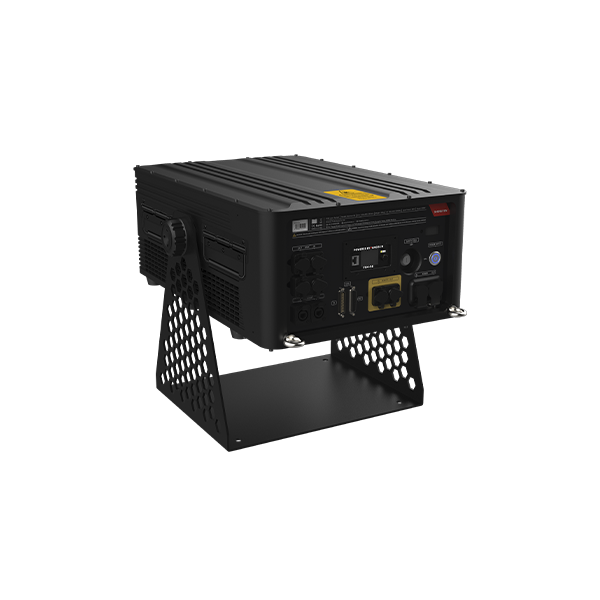
Please follow this line carefully. We will compare real constraints and safer design habits, and we will keep the language simple. Then we move to what comes next with control tech and smarter optics.
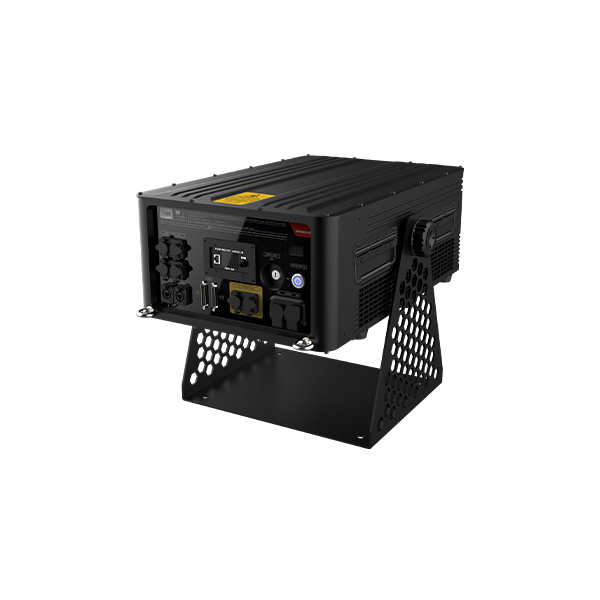
The Deeper Layer: Why 60W Works When Old Rigs Don’t
Where do conventional rigs fall short?
In earlier outlines, we covered basics like wattage and beam reach. Now let us go deeper. Traditional fixtures often chase lumens but ignore beam divergence and scanner torque. That is the hidden pain. If your galvanometer scanners cannot hold speed with low jitter, the aerial bloom loses shape. If the power converters sag under peaks, patterns wobble under load. Look, it’s simpler than you think: stable drivers plus thermal management keep the line sharp longer. A well-tuned 60W unit spreads energy the right way, not the wasteful way. It maintains duty cycle without tripping limits, and it keeps M² near spec, even when the wind lifts haze.
Older solutions also hide setup risks. You place towers far apart, then discover mismatched optics, drifting alignment, and no live feedback. Operators overcompensate with higher current—more heat, less lifetime. That sneaks up on budgets. A modern 60W platform reduces these traps by pairing beam quality with predictable control loops. It handles scan angles without clipping, and it rides city power with cleaner input filtering. In short, fewer surprises on-site — and yes, it surprised planners, too. When the show must start on time, the “quiet” parts like bearings, fans, and PID tuning matter as much as raw wattage.
Comparative Principles: New Control Makes the Night Cleaner
What’s Next
Let us shift to a forward view. Legacy gear drew straight lines well, but dynamic shapes needed more. New systems add adaptive optics, tighter PID in the scanner amps, and smarter power stages. They use real-time beam shaping to correct hot spots as patterns move. Some controllers act like edge computing nodes, sampling temperature, current, and scan position at high rate. The result is steadier output under gusts and fog. When a venue treats the façade as a stage—think a precise laser for building mapping—this tighter loop prevents smear and keeps corners crisp. Combine that with safer firmware interlocks and you get repeatable looks without babysitting the console.
This is also where comparative insight helps. A mid-power unit with excellent thermal design can beat a higher-rated but unstable box. The trick lies in beam divergence control, galvanometer linearity, and clean power rails. Modern 60W systems balance all three. They keep scan speeds useful without overshoot, manage heat so color stays consistent, and filter input spikes that would skew the pattern. The lesson from the field: quality of control equals quality of art. And the city sees the difference even from a kilometer away (quiet streets, bright lines).
To choose well, use three metrics: 1) Beam integrity at distance—check divergence, M², and real scan fidelity, not just watts; 2) Thermal stability—ask for logged duty cycle, fan curves, and output droop over time; 3) Power resilience—look at power converters, surge handling, and noise that might hit the scanners. Evaluate with these, and your skyline remains clean, safe, and on schedule. For deeper specs and reference builds, please see Showven Laser.