Introduction: Where First Contact Shapes Throughput
A client steps in at 8:30 a.m., glances at the counter, and scans for cues—signage, workflow, order. Reception Desks are the first clinical checkpoint for service, identity, and flow. In many salons and clinics, the first 90 seconds define the rest of the visit. Data from queue studies show that perceived wait beyond two minutes can cut conversion by 20–30%, and each extra touchpoint raises contamination risk in health-adjacent environments. So, is your front desk tuned for fast intake and clean handoffs, or is it a bottleneck with a nice face?
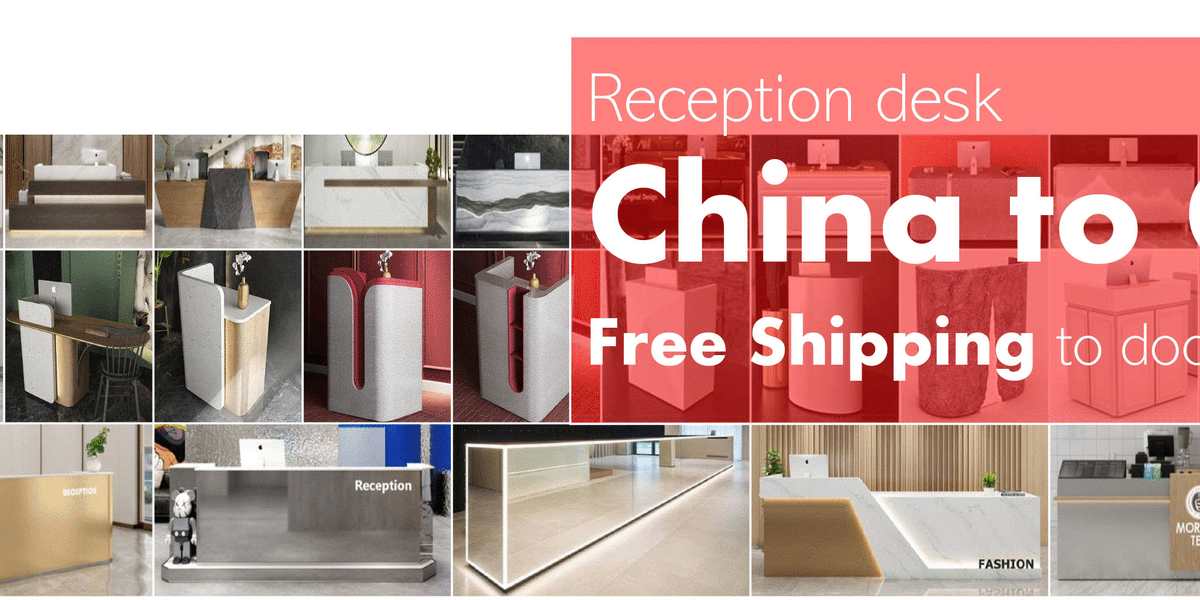
Think of the desk as a controlled interface: signal, routing, and response. Intake forms, payment, scheduling, and wayfinding all map to throughput. When lighting, cable management, and device placement fight each other, staff compensate—often with workarounds (sticky notes, improvised trays). That is not scalable. The question is not only “Does it look good?” but “Does it reduce handling, errors, and cross-contact?” — and can it adapt as service models shift? Let’s step into the operational layer that separates a pretty counter from a real system, then compare what will carry you into the next cycle.
Hidden Frictions at the Salon Front: What Operations Don’t Show on the Mood Board
What’s breaking the flow?
At the core, a beauty salon reception desk should shorten steps and reduce touch. Yet many counters hide small frictions: glare on the screen, card readers outside reach, and drawers that collide with staff movement. Technical fit is the quiet culprit. Devices need stable power, isolated cable runs, and easy sanitizing. Look, it’s simpler than you think: align the travel path, size the transaction zone, and verify device heat and airflow. Add access control for secure cash drawers and client records. Place edge computing nodes close to POS to cut latency for appointment sync. You get precision intake and fewer errors—without adding staff time.
Another blind spot is the physical load of tech. Extra hubs and bricks strain power converters and create heat islands inside cabinetry. Over time, that leads to flaky peripherals and resets during peak hours—funny how that works, right? A clean design segments low-voltage from mains, protects cable bend radius, and allows top-out venting. Then comes data flow. Reliable queue management and RFID card handoff speed up check-in. Mounting surfaces must accept frequent disinfection without clouding or warping. And for ADA compliance, the reach envelope should fit diverse users. Precision here is not cosmetic; it is clinical. When staff do fewer corrective moves, throughput rises and cross-contact drops.
Comparative Outlook: Materials, Modules, and Measurable Gains
What’s Next
The upgrade path is not only “new countertop.” It’s modular design guided by simple technology principles. First, separate service planes: a public plane for client touch, and a protected plane for devices and cabling. Second, standardize power and data with USB-C PD power converters and a small PoE switch. Third, bring compute closer. A compact IoT gateway near the POS reduces sync time for bookings and receipts. Now compare materials. A stone-clad counter looks timeless, but a laminated core with antimicrobial film can be lighter, quieter, and easier to retrofit. If you require a premium finish, a marble reception desk with service cutouts and vented plinths can still meet thermal and cleaning specs—form plus function. Add cable gutters, quick-release mounts, and removable kick plates. Serviceability rises, downtime falls. Small shifts yield compound gains—funny how that works, right?
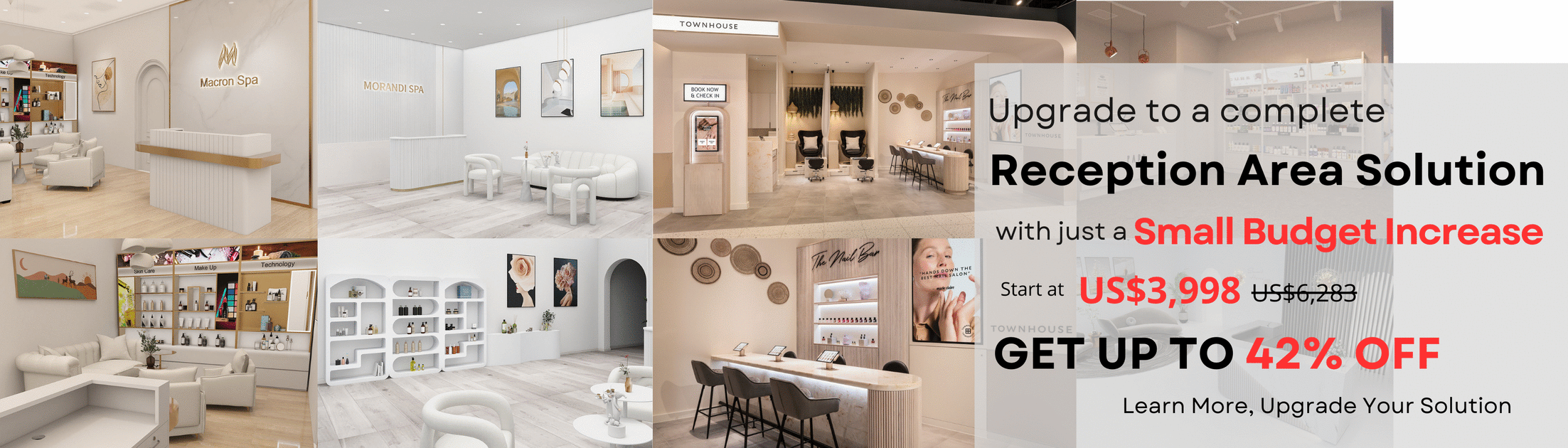
Pulling it together, here are three evaluation metrics to guide selection in clear, testable terms. 1) Time-to-serve delta: measure check-in to payment before and after the change; aim for a 20% reduction by reorganizing the interaction zone and optimizing device layout. 2) Reliability index: track weekly device resets and cable-related faults; target near-zero by isolating heat, using proper power budgeting, and protecting connectors. 3) Upgrade elasticity: confirm that shelves, mounts, and cutouts accept new peripherals, edge computing nodes, and access control without carpentry. Keep an eye on the total life cost, not just the invoice. When a front desk behaves like a lean system—clean signal, short path, strong uptime—clients feel it, and staff keep pace. For further technical specs and layout ideas, see M2-Retail.